Most business stories begin with a confident sales pitch. This one begins with a pair of sports shoes that nobody in the shop felt brave enough to clean.
Brad recently began supplying a specialist shoe and bag cleaner to a local business that cleans and restores sneakers. We sat down with him to find out how the partnership began, how the deal came together, and why he believes the relationship around a product matters just as much as the product itself. Wherever possible, we’ve let him tell the story in his own words.
Walking in at the right time
Brad didn’t arrive with a polished sales script. Instead, he popped into the shop, introduced himself, and made an appointment to come back and demonstrate the product properly.
After the demonstration, he left the cleaner with the team for more than a week, so that they could test it on their own shoes, in their own time, with no cost and no obligation. When he followed up, their response was enthusiastic, because the cleaner had solved a problem their existing products couldn’t. The trouble with those products, Brad explains, was “not being able to clean the sneakers that had some form of leather on it.” His cleaner performed noticeably better.
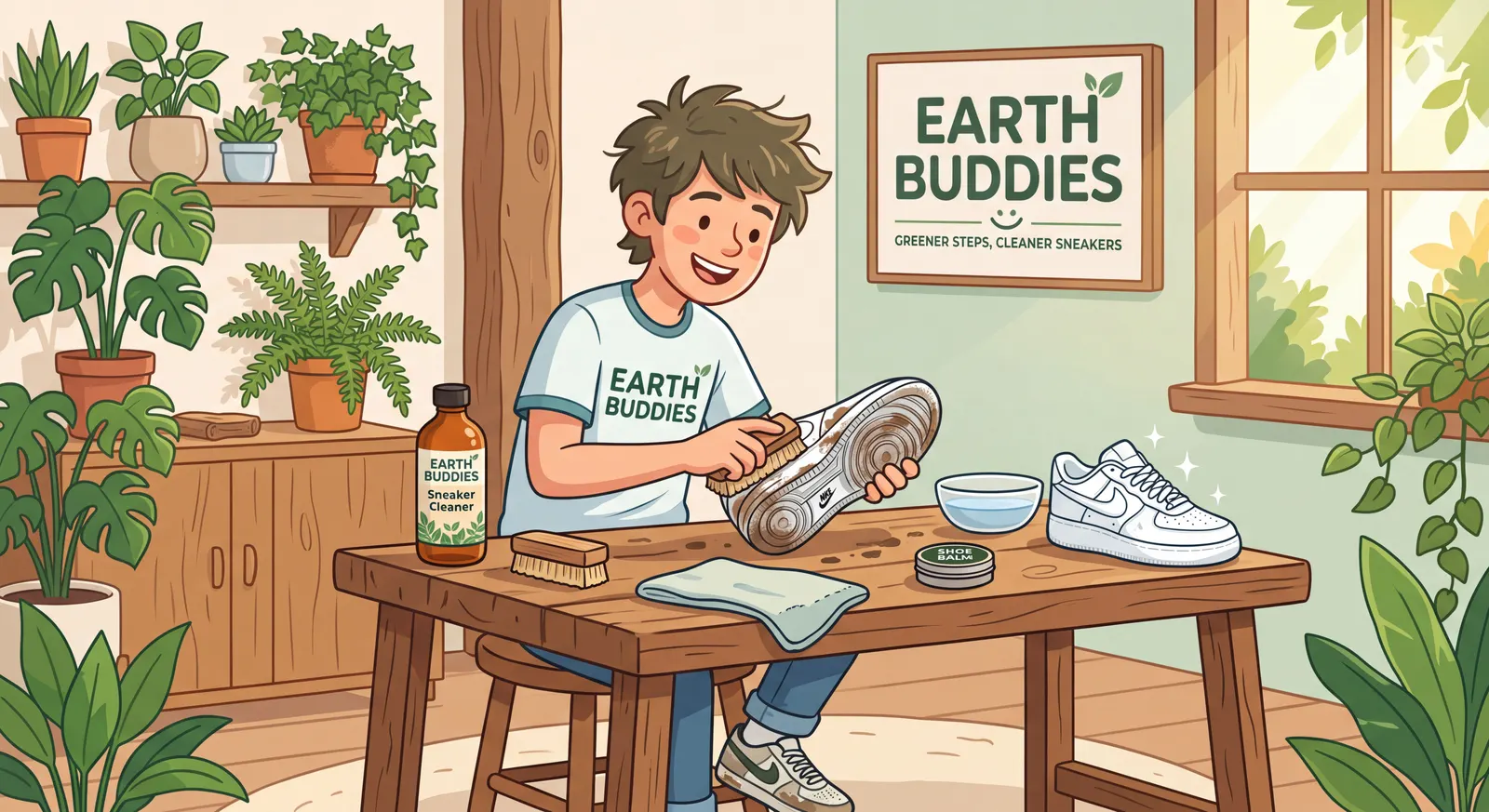
What finally convinced them, though, was a single pair of shoes. The team had a pair sitting on their shelf that they were reluctant to tackle, because they didn’t trust their current product to clean it without causing damage. “It was the perfect timing to walk in and give them enough product to do that pair,” Brad remembers, “and prove that the product was able to do exactly what it was supposed to.”
“You have to believe in your product.”
Brad Cassell
Made for one job
Plenty of cleaning products look almost identical on a shop shelf, and Brad even sells a more general-purpose cleaner himself. What sets this one apart is that it was designed for a single market: sports shoes and bags, including sports bags and canvas bags.
That narrow focus turns out to be its greatest strength. “Because it’s so specific, it’s safe for the product being cleaned, and you get better results as well,” Brad explains. A general cleaner has to cope with everything from kitchen counters to car seats, whereas a specialist cleaner is developed around the materials it will actually encounter, such as the leather panels found on many sneakers.
Trust comes before the sale
Ask Brad about his approach to business, and he talks about people before products. Rather than dropping off a box and disappearing, he runs demonstrations, works alongside the staff, and makes sure they understand how to use the product properly.
“I am open to conversation as to any questions that they have, good or bad,” he says. “My approach is to give them full backing, not just the product. If they have a problem, I’m available.”
He also believes that you can’t expect someone to trust a product you aren’t confident in yourself. When you’re building a relationship from scratch, it’s up to you to make the first move, which is exactly why he was willing to let the team trial the cleaner for free before they committed a single rand.
The only real question: price
When we asked Brad what had been hardest to agree on, he said there hadn’t really been any obstacles. The only thing the business needed to weigh up was cost, since his cleaner is slightly more expensive than the alternatives.
In the end, performance outweighed price. “The fact that it could do more than what other products are offering was the factor,” Brad says, and the business decided the extra cost was worth it.
Once they agreed to go ahead, Brad didn’t simply send an invoice. Here’s what the deal actually involved:
- A full kitThe cleaner, plus brushes and all the equipment the team would need.
- Delivered in personBrad brought everything to the shop himself.
- Hands-on trainingHe walked the team through using the product, step by step, until they felt completely comfortable.
- Ongoing supportHe remains available whenever questions come up, because he sees this as the foundation for future business rather than a once-off sale.
When a customer becomes a connector
One of the clearest signs that a business relationship is healthy is when your customers start recommending you to other people, and that is exactly what happened next.
The business referred Brad to an entrepreneur who was launching a new sports shoe cleaning company, and that company has already bought the product. In total, this single relationship has led to two additional sales beyond the original shop.

For Brad, a referral like this says a great deal. “They wouldn’t have referred me if they didn’t like the product, first of all,” he says, “and if they didn’t trust my ethics and my approach to the interaction with selling.”
His next step is to visit the shop again, both to see how the team is getting on with the product and to thank them in person for the recommendation.
What’s in the bottle
Brad is careful about the claims he makes. Some companies describe their products as “green” without any evidence to support it, a misleading practice known as greenwashing, and Brad wants no part of it. So rather than relying on a vague label, here is precisely what he told us about how this cleaner is produced.
How it’s made, according to Brad
- Sustainably sourced
- Not tested on animals
- Ethically produced
- Fair trade
- Fully biodegradable
Biodegradable means the product breaks down naturally, through living things like bacteria, after it’s been used. Fair trade means the people who make and supply it are paid and treated fairly.
Apart from how effectively it cleans, these values are what matter most to Brad. They are, he says, “the main focus on everything I do,” and they guide his choice of products that can be used “in your home or out on the sports field.”